
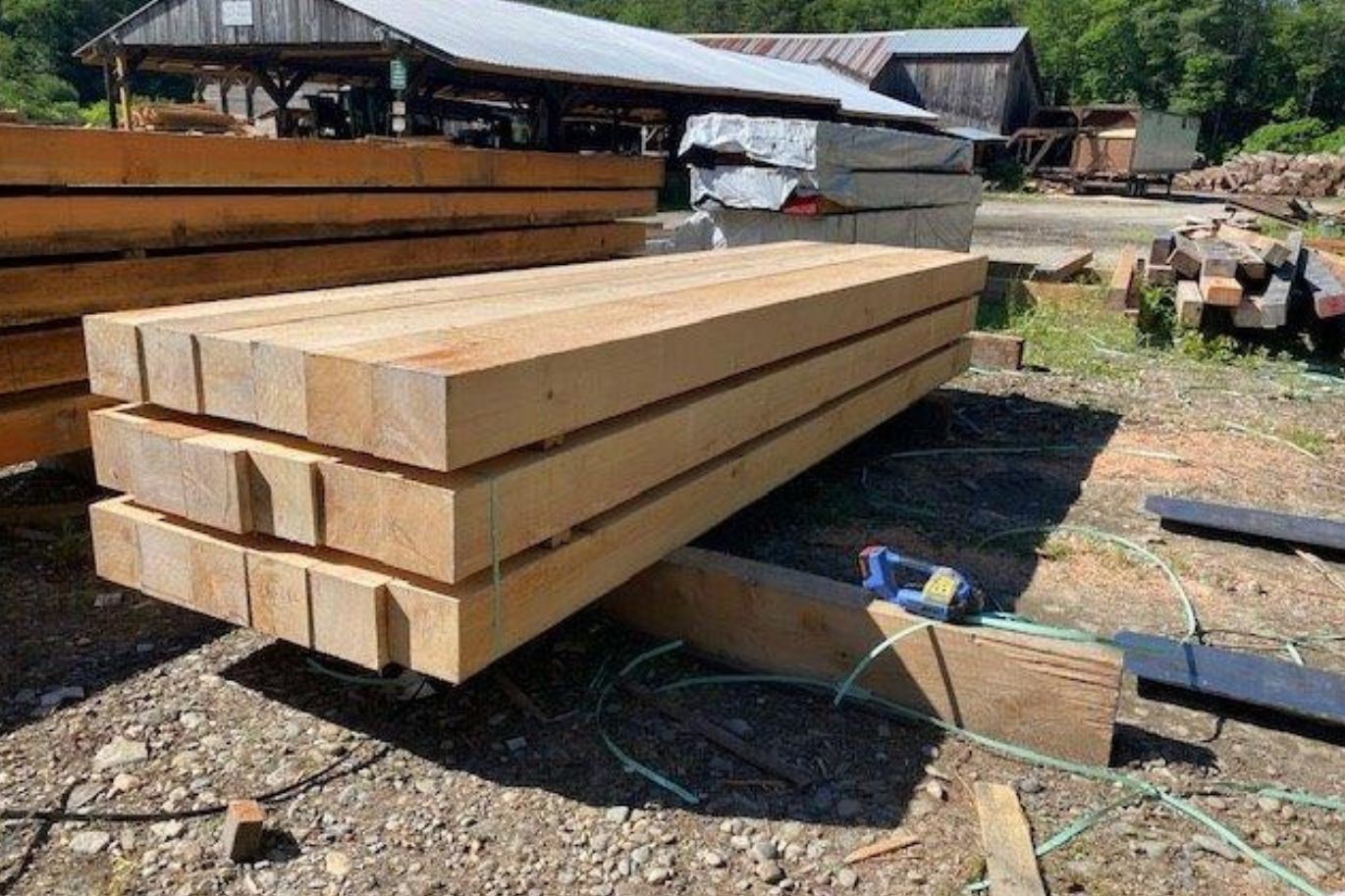
Timber frame construction combines structural performance, skilled craftsmanship, and the natural beauty of exposed wood. Whether you are designing a custom home, pavilion, barn, commercial space, or post-and-beam addition, the timbers you select can affect everything from structural engineering and joinery to appearance and construction schedules.
That is why timber selection should happen early in the planning process. Before ordering Douglas Fir timbers, builders, architects, engineers, and timber framers should consider the timber grade, moisture condition, dimensions, finish, appearance, and delivery requirements.
Here are some of the most important decisions to make before placing your order.
Why Is Douglas Fir Used for Timber Frame Construction?
Douglas Fir is widely used for timber framing because it offers an excellent combination of strength, stability, workability, and natural beauty. Its strength-to-weight characteristics make it well suited for structural posts, beams, rafters, trusses, and other large timber components.
Douglas Fir also has a warm color and distinctive grain that make it an attractive choice for exposed applications. When properly selected and finished, the timbers can serve as both structural elements and prominent architectural features.
However, not all Douglas Fir timbers offer the same quality or performance. How the timber is cut, dried, graded, and prepared matters.
1. Understand the Difference Between FOHC and Boxed-Heart Timbers
One of the first specifications to consider is whether the Douglas Fir timbers will be Free of Heart Center, commonly abbreviated as FOHC.
The heart center, or pith, is the small central portion of the tree around which the growth rings form. A boxed-heart timber includes this center within the finished piece. A Free of Heart Center timber is cut so that the pith is excluded.
Why does that matter?
As wood loses moisture, it naturally changes dimension. Timbers containing the heart center can experience greater internal stress as they dry, potentially contributing to more noticeable twisting, splitting, and checking. Removing the heart center helps the timber dry and move more evenly.
FOHC Douglas Fir does not eliminate every natural check or dimensional change. Wood remains an organic material, and some movement should always be expected. However, FOHC timbers generally offer greater stability and a more consistent appearance, making them especially desirable for exposed timber-frame construction.
2. Confirm the Required Timber Grade
Structural lumber is graded according to characteristics that affect its strength and performance. The appropriate grade will depend on the timber’s intended use, dimensions, span, loading requirements, and the project engineer’s specifications.
For structural applications, do not select timbers based on appearance alone. A beautiful piece of Douglas Fir must still meet the necessary structural requirements.
Brazier Lumber stocks Dense No. 1 grade and better Douglas Fir timbers. Builders and architects should work with their engineer or timber-frame designer to determine the correct grade and design values for each application before finalizing the order.
Questions to address include:
- Will the timber function as a post, beam, rafter, brace, or truss component?
- What loads will it be required to support?
- Will it be used indoors or exposed to exterior conditions?
- Does the engineer require a particular species, grade, or grading documentation?
- Are appearance requirements different from structural requirements?
Addressing these details early helps prevent substitutions, redesigns, and approval delays later.
3. Determine the Correct Timber Dimensions
Large timbers are not one-size-fits-all. A timber-frame project may require multiple cross sections and lengths based on the structural design, joinery, spans, and architectural appearance.
Before requesting a quote, prepare a clear timber list that includes:
- Nominal or finished dimensions
- Required lengths
- Quantity of each size
- Structural grade
- Surface finish
- Intended use
- Any special appearance requirements
It is particularly important to clarify whether the dimensions shown on the plans are rough-sawn dimensions or the final dimensions required after planing. Planing removes material from the surface, so a custom-planed timber will be slightly smaller than its original rough-sawn size.
Your timber supplier, designer, engineer, and fabricator should all be working from the same dimensional expectations.
4. Consider the Timber’s Moisture Condition
Wood contains moisture when it is harvested and begins changing as that moisture leaves the material. The species, timber thickness, drying method, storage conditions, and intended application all affect the drying process.
Building with very wet or green timbers can result in more movement after installation. As the timbers dry in place, they may shrink, twist, or develop larger checks. These changes can affect joinery, connections, finishes, and the final appearance of exposed wood.
Air drying allows moisture to leave the timber gradually. This can reduce internal stress while helping preserve the wood’s natural character, color, and grain.
Brazier Lumber specializes in air-dried Free of Heart Douglas Fir timbers. For projects in which the wood will remain visible, the combination of FOHC sawing and air drying can provide better dimensional stability and a more refined finished appearance.
5. Choose Between Rough-Sawn and Custom-Planed Timbers
The right surface finish depends on the project’s style and how prominently the timbers will be displayed.
Rough-sawn timbers retain the texture created during milling. They are often selected for rustic structures, barns, outdoor buildings, and projects where a more natural or traditional appearance is desired.
Custom-planed timbers have smoother, more uniform surfaces. Planing can highlight the grain and provide a more finished appearance for custom homes, gathering spaces, exposed interiors, and architectural applications.
Before ordering, consider:
- Will the timbers remain exposed?
- Is the desired appearance rustic or refined?
- Will the wood be stained, sealed, or left unfinished?
- Do the plans specify exact finished dimensions?
- Will additional sanding or finishing occur after delivery?
Brazier Lumber offers Douglas Fir timbers rough-sawn or custom-planed to order.
6. Set Realistic Expectations for Natural Wood
Douglas Fir is valued for its beauty, but no two timbers are identical. Variations in grain, color, knots, and checking are natural characteristics, not manufacturing defects.
Even high-quality FOHC, air-dried timbers can continue responding to seasonal changes in humidity after installation. Small checks may appear or change over time. Exterior timbers can also weather differently depending on sunlight, precipitation, ventilation, and protective finishes.
If appearance is especially important, communicate those expectations before ordering. Let your supplier know which faces will be visible and whether certain timbers will become focal points within the finished structure.
7. Plan for Joinery and Fabrication
Traditional timber framing frequently uses mortise-and-tenon joints, wooden pegs, braces, and other connections that require accuracy. Modern projects may also incorporate steel plates, bolts, concealed fasteners, or engineered connectors.
The moisture condition and final dimensions of the timbers can influence how these connections are designed and fabricated. The timber framer should confirm whether joinery will be cut before or after final surfacing and account for any expected dimensional movement.
Coordinating the timber order with the fabricator early can help ensure that delivered materials match the shop drawings, machinery, and joinery requirements.
8. Discuss Availability and Delivery Early
Large, high-quality timbers require more planning than standard dimensional lumber. Unusual sizes, long lengths, custom planing, and specific appearance requirements can affect availability and preparation time.
Delivery logistics also deserve consideration. Before scheduling the shipment, confirm:
- Site access for the delivery vehicle
- Equipment needed to unload the timbers
- A dry, properly supported storage area
- Protection from mud, standing water, and direct weather exposure
- The sequence in which the timbers will be fabricated or installed
Involving Brazier Lumber early allows our team to review availability, identify potential challenges, and help keep your project on schedule.
What Information Should You Provide When Requesting a Quote?
The more information you provide, the more accurately a timber supplier can prepare your quote. Whenever possible, include:
- Project location
- Timber species
- Grade requirements
- Dimensions and lengths
- Quantities
- Rough-sawn or planed finish
- Desired delivery date
- Structural or architectural specifications
- Drawings or a timber schedule, when available
- Any special appearance or handling requirements
If every detail has not yet been finalized, that is okay. An experienced timber supplier can help you identify the decisions that still need to be made.
Start the Conversation Early
The best time to contact your timber supplier is before the plans, joinery, and construction schedule are completely locked in. Early coordination can help architects specify the right material, allow engineers to confirm structural requirements, and give builders a clearer understanding of availability and delivery timing.
Brazier Lumber supplies premium air-dried Free of Heart Douglas Fir timbers for home builders, contractors, timber framers, architects, engineers, and other construction professionals throughout New England. We stock Dense No. 1 grade and better timbers, available rough-sawn or custom-planed to order.
Planning a timber frame, post-and-beam, or exposed-timber project? Contact Brazier Lumber to discuss your timber specifications, availability, and project schedule.